fbpx
Loading

Understanding the Difference: Spanish vs. American Educational Systems. Why Our International Approach Stands Out .

At Lighthouse we proudly combine New York State learning standards with the globally recognized IB (International Baccalaureate) framework, offering students a unique, world-class education.

For families deeply involved in their children’s education, understanding how our system compares to others can be incredibly valuable. While some may be familiar with the traditional Spanish curriculum, many of our families come from diverse educational backgrounds. So, how does our approach compare? More importantly, what advantages does this international, forward-thinking model bring to your child’s growth?
Spanish vs. American Educational Systems: Key Differences

One of the primary differences between the two systems is the structure and focus of the curriculum.

In the Spanish curriculum, subjects like biology are introduced early, with students diving into ecosystems, human anatomy, and plant biology during their primary years. The approach is often subject-specific and content-heavy, emphasizing factual knowledge.

In contrast, the American curriculum takes a more balanced and gradual approach, introducing science through physics, chemistry, and environmental topics in the earlier grades. This ensures students develop a strong foundation in scientific thinking before they transition into more complex biological topics around 6th grade. This sequencing helps students build critical problem-solving and analytical skills, preparing them to understand and engage with biology at a deeper level when they reach middle school.

Beyond science, a key strength of the American system is its focus on writing and communication skills. From an early age, students are taught how to express their ideas clearly and effectively through writing. Whether it’s persuasive essays, creative writing, or research reports, students are consistently encouraged to develop their voice and communicate complex ideas with clarity. In addition, oral presentations and public speaking are integrated into the curriculum, helping students gain confidence in expressing themselves in front of an audience. These critical communication skills are often less emphasized in the Spanish system, where there is a stronger focus on fact memorization and subject-specific learning.

By prioritizing writing and speaking skills, our curriculum ensures that students not only gain knowledge but also learn how to articulate and share that knowledge in meaningful ways.
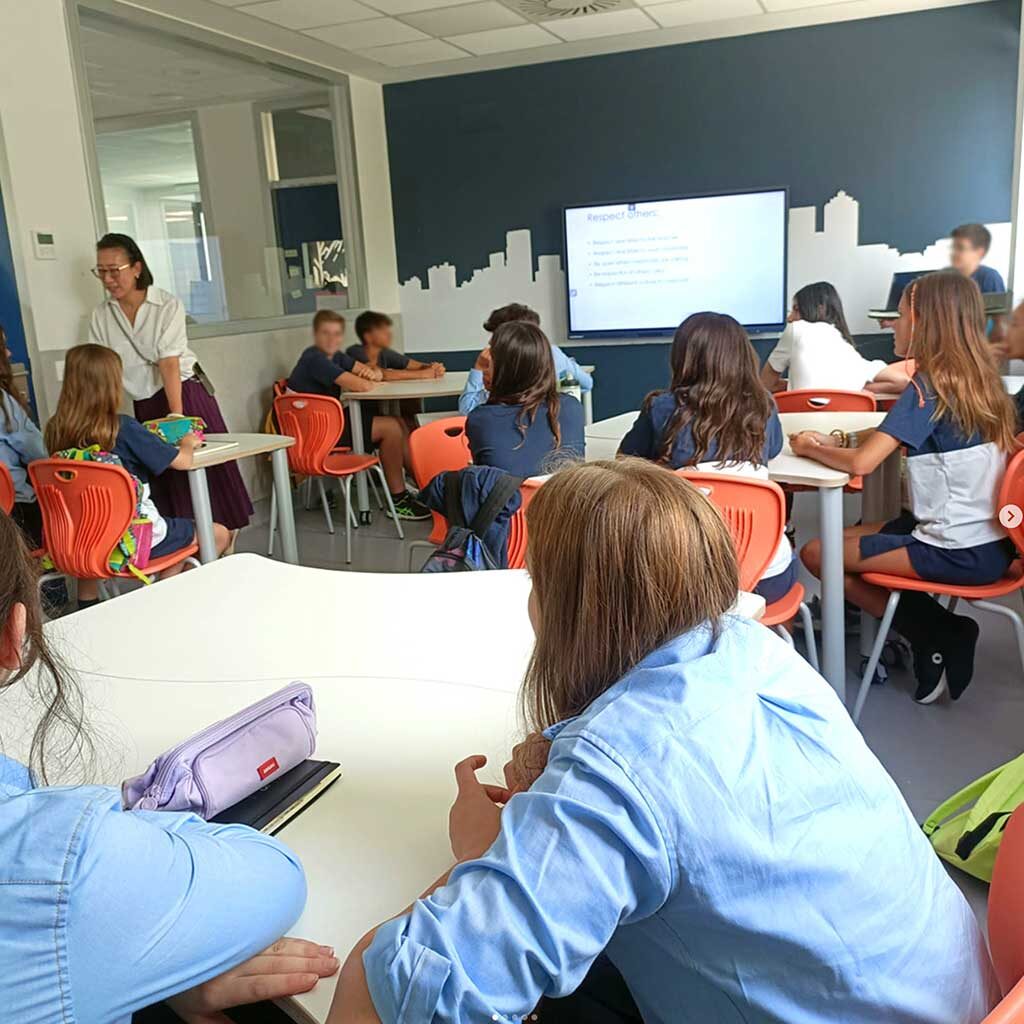
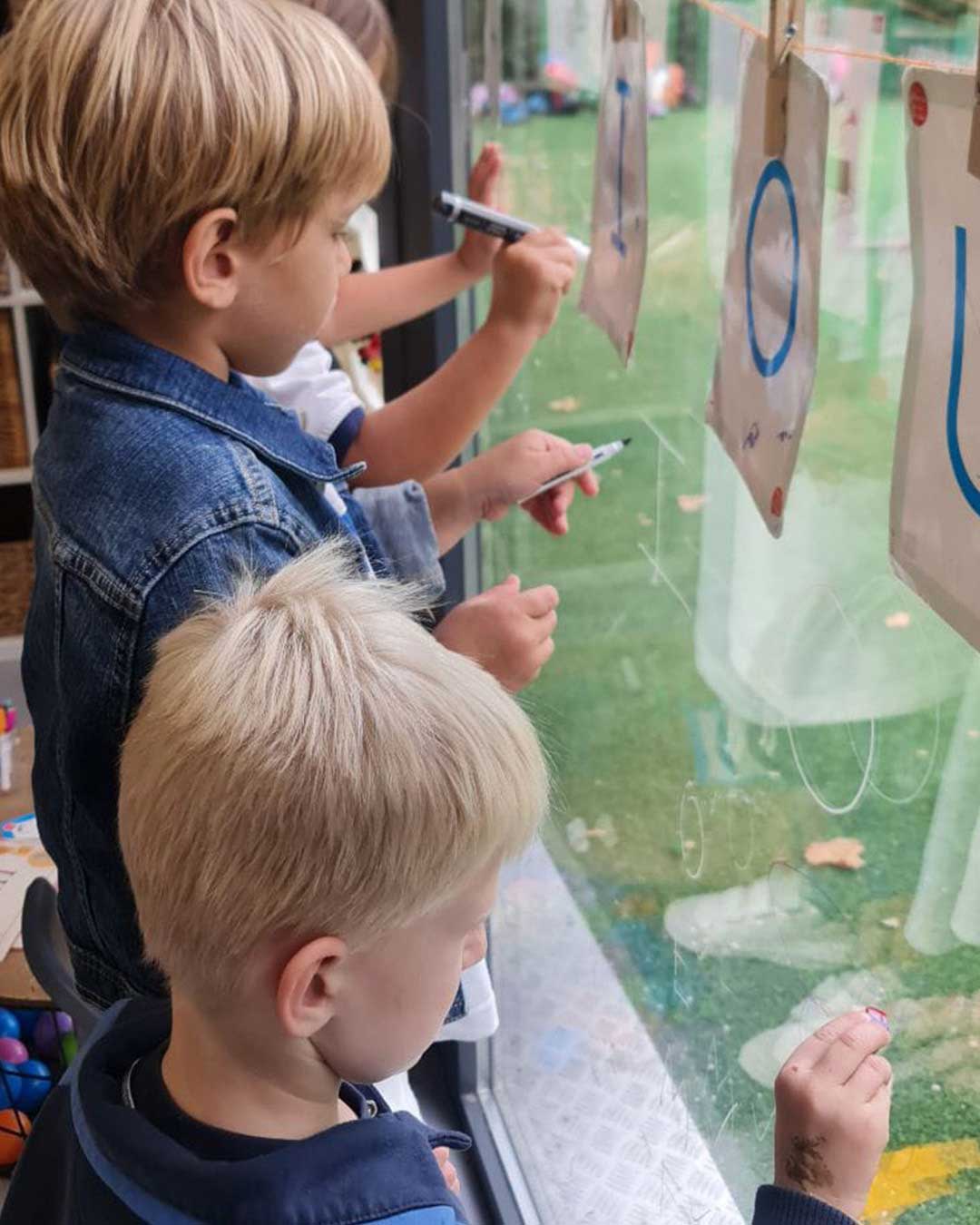
At Lighthouse we take a different approach. Inquiry-based learning is emphasized. Students are encouraged to explore, ask questions, and think critically.
Rather than simply memorizing facts, they engage with the “why” behind concepts, fostering a deeper understanding and developing skills that serve them well beyond the classroom.
Our teaching philosophy nurtures creativity, independence, and a genuine love for learning—qualities that will benefit students throughout their academic and professional lives.”
Teaching Philosophy

Traditional educational systems focus on memorization and structured learning, with success measured largely by standardized assessments and exams. Students are often required to recall and reproduce information, which strengthens their knowledge base but limits opportunities for deeper inquiry and critical thinking.

At Lighthouse we take a different approach. Inquiry-based learning is emphasized. Students are encouraged to explore, ask questions, and think critically. Rather than simply memorizing facts, they engage with the "why" behind concepts, fostering a deeper understanding and developing skills that serve them well beyond the classroom. Our teaching philosophy nurtures creativity, independence, and a genuine love for learning—qualities that will benefit students throughout their academic and professional lives.

“At Lighthouse we evaluate students through a combination of exams, projects, presentations, and group work.
This balanced approach allows us to measure not only academic progress but also personal growth in areas like critical thinking, teamwork, and problem-solving—skills that are essential in today’s world.
Assessment Methods

In conventional education, exams are the primary method of assessment, with a focus on students’ ability to recall information in a structured, test-driven format. While this can effectively gauge knowledge retention, it doesn’t always reflect broader skills like collaboration, communication, or creativity.

As professionals in education, we know that assessment is more well-rounded and diverse. At Lighthouse we evaluate students through a combination of exams, projects, presentations, and group work. This balanced approach allows us to measure not only academic progress but also personal growth in areas like critical thinking, teamwork, and problem-solving—skills that are essential in today's world.

What makes our international school truly special is the combination of the American curriculum with the IB framework, a rare and powerful blend that sets us apart from other schools in Madrid.
After all, not many are able to offer PYP and MYP like we do.
What makes us so special?

What makes our international school truly special is the combination of the American curriculum with the IB framework, a rare and powerful blend that sets us apart from other schools in Madrid. After all, not many are able to offer PYP and MYP like we do.

1. A Global Perspective: While our curriculum follows the standards of New York State, the IB framework encourages students to think globally. This means your child is not only prepared for academic success in the U.S. or Europe, but also gains a broader, international perspective—something that is becoming increasingly important in a connected, globalized world.

2. Inquiry-Based Learning: Inquiry-based approach fosters curiosity and independent thinking. It encourages students to actively engage with what they are learning, asking thoughtful questions and seeking out their own answers. This model helps students develop the skills to be lifelong learners, capable of adapting to whatever challenges they may face in the future.

3. Holistic Development: If we want a student to be successful, our focus cannot be only the academic rigor. Through the Learner Profile, our students grow in areas such as open-mindedness, empathy, and critical reflection. These traits, alongside strong academic skills, prepare students to navigate complex social and professional landscapes with confidence. In today's fast-paced and interconnected world, a well-rounded education is key to preparing students for future challenges and opportunities. The combination of the American curriculum and the PYP-MYP framework at our school offers a dynamic, future-focused approach that balances academic rigor with critical thinking, creativity, and a global perspective.

Research shows that students in inquiry-based learning environments, tend to be more engaged and successful in higher education.
Our focus on critical thinking, research, and self-management equips students not just for academic success, but for life.
This holistic development ensures that our students are well-prepared for the future, both academically and personally.
The strength of a Global, Balanced education

For our peace of mind, research shows that students in inquiry-based learning environments, tend to be more engaged and successful in higher education. Our focus on critical thinking, research, and self-management equips students not just for academic success, but for life. This holistic development ensures that our students are well-prepared for the future, both academically and personally.

In choosing Lighthouse for your child, you’re opting for an education that goes beyond traditional systems. Our approach offers not only high academic standards but also the tools to help students thrive in today’s complex and evolving world. Families can feel confident knowing that this combination of educational excellence equips their children with the skills, mindset, and global awareness to lead, innovate, and succeed in the future.